
We’ve trained machines to think like us. Now we’re building them out of us.
Thought Exploration Series

7 min read
June 11, 2025
The mind is no longer bound by the skull. And intelligence? It’s evolving — again.
Ina quiet lab in Melbourne, Australia, brain cells are learning. Not in a human body. Not in a lab mouse. But on a microchip.
Welcome to the CL1, the world’s first commercially available biological computer, developed by Cortical Labs. It combines living human neurons with silicon hardware to create hybrid neural networks that literally think — not through lines of code, but through pulses of electricity and biological memory.

This isn’t a metaphor. These are real neurons — grown, cultured, and trained — learning patterns and reacting to stimuli. Together, they form a living, learning system.
Not simulated intelligence.
Biological intelligence.

. . . . .
Digging deeper
Scientists start by taking human skin cells and turning them into stem cells. These stem cells are then guided to become brain cells — called neurons. Once ready, the neurons are placed onto a flat surface the size of a coin, which is wired with a tiny grid of sensors. You can think of it like a digital chessboard, but instead of pieces, you’re placing living brain cells.
How Skin Cells Become Stem Cells
Scientists start with ordinary skin cells — like the kind you could collect with a swab. These cells are already specialized, meaning they have one job: being skin.
But in 2006, researchers discovered a way to rewind these cells back to an earlier, more flexible state — turning them into stem cells. These stem cells are called induced pluripotent stem cells (iPSCs).
How do they do it?
They insert a small set of specific genes into the skin cells. These genes act like “reset switches,” telling the cell to forget it’s skin and become a blank-slate stem cell again. It’s a bit like restoring a phone to factory settings — but biologically.
Once in this reset state, the cells can be guided to become almost any other type of human cell — including neurons.
As the neurons settle in, they begin to connect with each other — forming tiny networks, just like in a real brain. These networks naturally start firing off electrical signals. That’s what neurons do: they send little pulses to communicate.
Now, here’s the clever part. The grid of sensors underneath the neurons can both listen to these signals and talk back. Scientists can send in digital information — like the motion of a ball in a video game — and see how the neurons respond. If the cells start reacting in a way that leads to better outcomes (like hitting the ball back), that pattern is reinforced. The neurons learn. Not with code. Not with data. But by adjusting their own behavior — just like a brain would.
So when we say this machine thinks using real brain cells, we mean it. It senses. It responds. And over time, it adapts.
The Brain as a Garden
Imagine planting seeds on a smart garden tile. As the plants grow, the tile gives them light, water, or music — and watches how they react. Over time, the plants start to lean, stretch, and change in response. That’s what these neurons are doing. They’re growing on a smart surface — and learning through experience.

. . . . .
Why Biological Computing? What’s the Point?
Modern AI is powerful — no doubt. But it’s brittle, energy-hungry, and data-dependent. It takes millions of examples to train a system to recognize a cat. It can hallucinate. It can’t improvise with confidence in unfamiliar territory.
Biological neurons, on the other hand, offer something uniquely valuable:
- Energy efficiency: They run on micro-watts. A biological neural net uses a fraction of the power consumed by even a small AI model running on silicon.
- Adaptability: They don’t require reprogramming — they learn in real time.
- Plasticity: They self-organize, connect, and rewire as needed.
- Embodied cognition: They evolved not just to process logic, but to feel, adapt, and respond in messy, dynamic environments.
In one of Cortical Labs’ foundational experiments, 800,000 neurons were trained to play Pong. Not through code, but by receiving electrical signals mimicking a game environment. The cells adapted. They learned. Faster than many traditional reinforcement learning agents.
That’s more than a cool party trick. That’s a different model of intelligence.
. . . . .
The Emerging Ecosystem of Living Machines
Cortical Labs is leading, but it’s not alone.
FinalSpark (Switzerland)
They’ve launched the first online biocomputing platform, where scientists can run experiments on neuron cultures remotely. These cultures consume up to 10,000 times less power than standard computers — a game-changer for sustainable AI.
Koniku (USA)
Koniku builds silicon-neuron hybrids that specialize in chemical sensing. Their chips, infused with real neurons, can detect smells, pathogens, and airborne toxins — tasks traditional sensors struggle with.
University Labs (Global)
Institutions from MIT to the University of Tokyo are exploring organoid computing, where miniature brain-like structures (grown from stem cells) perform tasks or respond to stimuli — raising both technological and ethical questions.
These companies aren’t building better chips.
They’re building a different kind of intelligence altogether.

. . . . .
Build to Complement, not Compete
To be clear, biocomputers won’t replace your phone’s processor. They’re not here to compete with silicon in raw speed or storage.
They are here to complement.
Biological intelligence excels where traditional computing fails:
— When input is ambiguous
— When context matters
— When rules can’t be clearly defined
— When learning needs to be fast, dynamic, and unsupervised
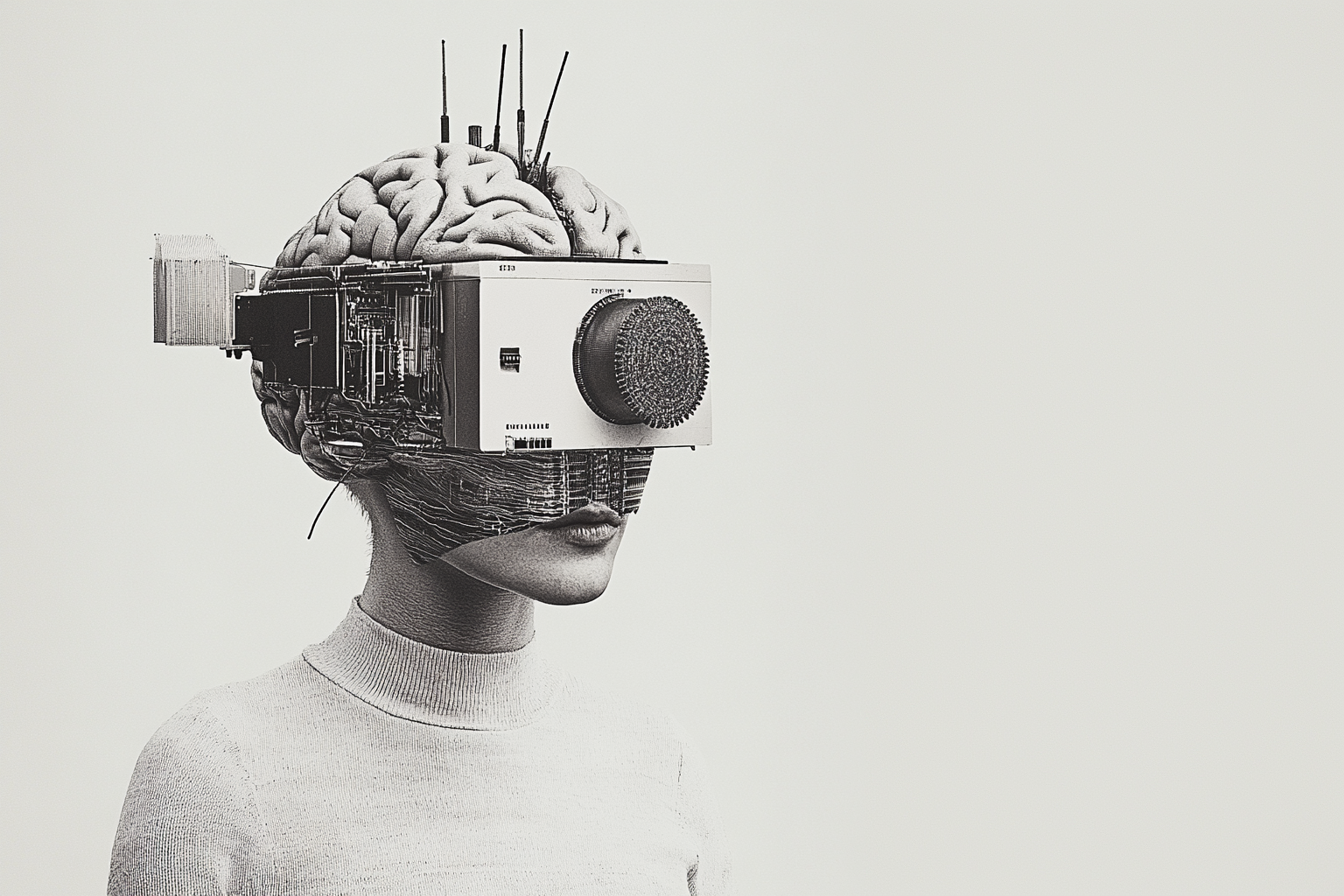
Think of it as a new substrate for cognition — not an upgrade to existing systems, but a new material entirely. Like switching from stone to bronze. From analog to digital. From code… to cells.
. . . . .
What AI Still Lacks: Embodied Intelligence
Here’s the philosophical leap:
The human brain wasn’t designed to exist alone. It evolved inside a body.
It learned through touch, motion, emotion, risk, and interaction with the world.
We think with our bodies.
We understand through sensation, feedback, and context.
Modern AI doesn’t. It’s disembodied. It has no pain, balance, hunger, or instinct. It doesn’t stumble. It doesn’t sweat. It doesn’t care.
As philosopher Andy Clark argues, the mind isn’t just in the head. It’s in the interaction between brain, body, and world.
And as neuroscientist Antonio Damasio has shown, feelings and bodily states play a central role in reasoning, decision-making, and awareness.
Biological computing doesn’t just bring neurons into machines.
It opens the door to bringing bodies into machines — or at least the sensory logic bodies provide.
. . . . .
What Kind of Mind Are We Building?
If neurons can now be cultured, connected, and taught…
If AI can learn through real cells instead of just code…
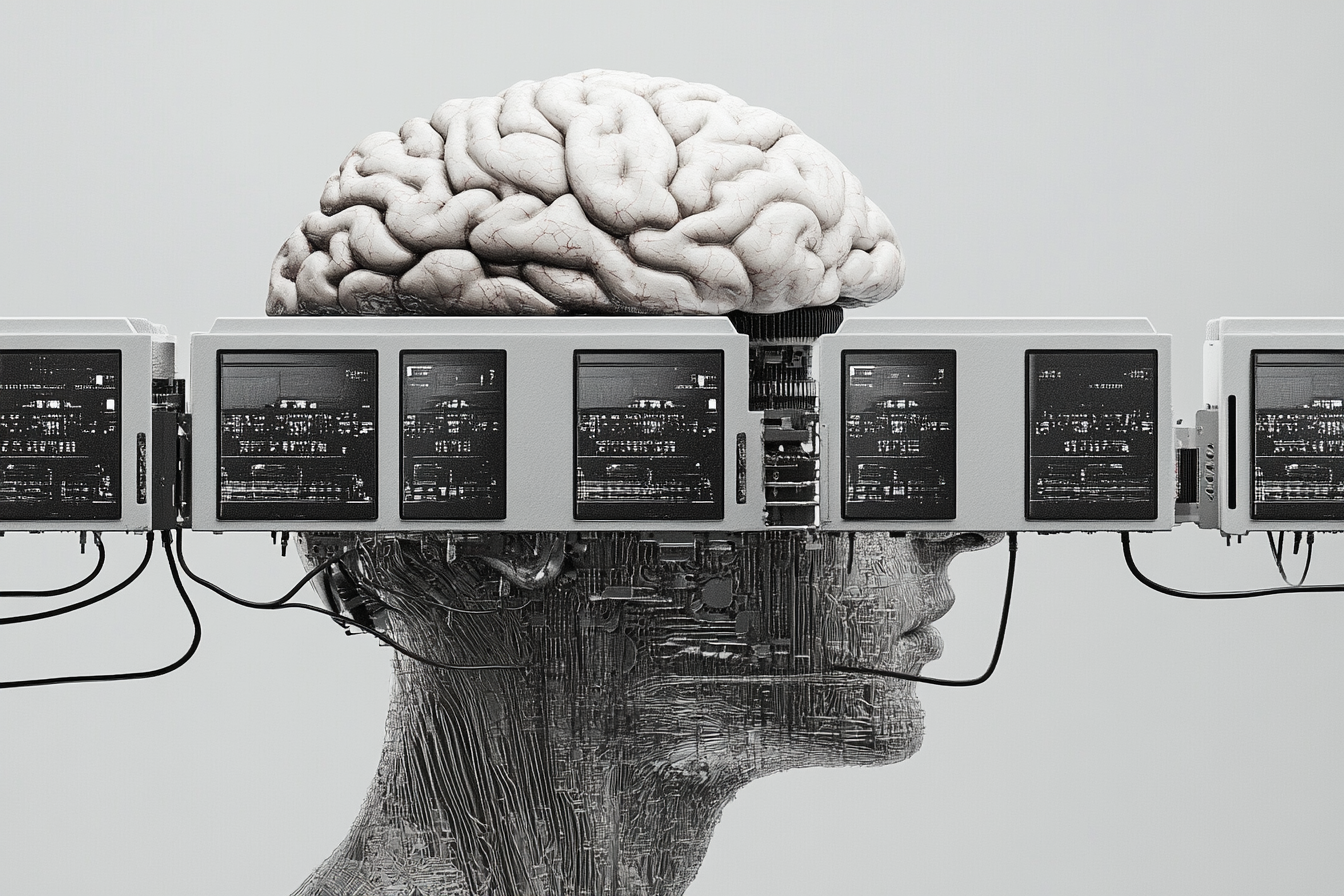
Are we still building machines? Or are we creating a new kind of life?
Biological AI doesn’t just push technology forward.
It challenges what we mean by thought, agency, and consciousness.
We’re moving from simulation to sensation.
From programming to nurturing.
The more intelligent our machines become, the more urgent it is to ask:
What parts of our own intelligence are truly non-transferable?
What will never fit in code?
And what happens when it does?.
. . . . .
Final Thought
Biological computing isn’t a gimmick.
It’s a philosophical leap — a redefinition of intelligence itself.
It invites us to blend the organic and the synthetic.
To craft thinking systems that are adaptive, embodied, and maybe one day… conscious?
The future of AI may not be purely digital.
It may be part human — in the most literal sense.
And we’re only just beginning to understand what that means. In the future, I’ll be exploring more about biological computing, embodied intelligence, and what it might mean to design machines that don’t just think — but live.
. . . . .
References & Further Reading
- Kagan, B. J., et al. (2022).
“In vitro neurons learn and exhibit sentience when embodied in a simulated game-world.”
Scientific Reports, Nature - Cortical Labs Official Site
Overview of the CL1 platform and biological computing research
https://www.corticallabs.com - FinalSpark: Neuroplatform
Remote-access biocomputing platform using living neurons
https://finalspark.com - Koniku Inc.
Neuro-silicon devices for chemical sensing and biotech applications
https://www.koniku.com - Takahashi, K., & Yamanaka, S. (2006).
“Induction of pluripotent stem cells from mouse embryonic and adult fibroblast cultures by defined factors.”
Cell, 2006
(Foundational research that led to the development of iPSCs) - Scientific American — Antonio Damasio on Embodied Cognition
“How the Body Shapes the Way We Think.”
Scientific American, 2021 - Clark, A. (2008).
“Supersizing the Mind: Embodiment, Action, and Cognitive Extension.”
Oxford University Press.
(Philosophical foundation for extended and embodied cognition)
. . . . .
 Radical Reflections